Scale conversions
100 feet in every model scale
Quick answer
100 feet measures 13.78 inches (349.9 mm) in HO scale, 7.5 inches (190.5 mm) in N and 25 inches (635 mm) in O. The conversion is the prototype dimension divided by the scale proportion, so 100 feet is 1200 inches divided by 87.1 for HO.
A round number for converting anything else quickly.
Scale conversion is division and nothing more. A scale is a proportion: HO is 1:87.1, so every prototype dimension is divided by 87.1 to get the model dimension. 100 feet is 100 prototype feet, which is 1,200 prototype inches, so in HO that is 1,200 divided by 87.1, which is 13.78 inches.
The reason this matters more than it looks: almost every mistake in model railroad scenery is a scale error. A building that is one storey too tall, a road that is too wide, a figure that is the wrong size next to a car. Getting the arithmetic right is easy and checking it against the table below takes seconds.
100 feet in every scale
Every standard modelling scale, with the model dimension in inches, millimetres and feet. The proportion column is the number you divide by.
100 feet is 13.78 inches in HO scale, 7.5 inches in N scale and 25 inches in O scale.
| Scale | Proportion | Model length (in) | Model length (mm) | Model length (ft) |
|---|---|---|---|---|
| Z | 1:220 | 5.45 | 138.5 | 0.45 |
| N | 1:160 | 7.5 | 190.5 | 0.63 |
| TT | 1:120 | 10 | 254 | 0.83 |
| HO | 1:87.1 | 13.78 | 349.9 | 1.15 |
| S | 1:64 | 18.75 | 476.3 | 1.56 |
| O | 1:48 | 25 | 635 | 2.08 |
| G | 1:22.5 | 53.33 | 1354.7 | 4.44 |
Scale proportions follow NMRA Standard S-1.2. Large scale is not a single proportion: models from 1:32 to 1:20.3 all run on the same 45 mm track and all get called G, so check the proportion of the specific model rather than trusting the letter.
The track gauge each scale runs on
Scale and gauge are two different things and confusing them causes real problems. Scale is the proportion of the model. Gauge is the distance between the rails. Most scales have one standard gauge, and several very different proportions share the 45 mm large scale track.
HO scale is 1:87.1 running on 16.5 mm gauge track, and N scale is 1:160 on 9 mm gauge.
| Scale | Proportion | Track gauge (mm) | Track gauge (in) | Character |
|---|---|---|---|---|
| Z | 1:220 | 6.5 | 0.256 | The smallest commercial scale, where a whole layout fits in a briefcase. |
| N | 1:160 | 9 | 0.354 | Half the linear size of HO, so a quarter of the area, which buys mainline run in a spare room. |
| TT | 1:120 | 12 | 0.472 | Between N and HO. A small but genuine following, and far less ready-to-run support than either neighbour. |
| HO | 1:87.1 | 16.5 | 0.65 | The default. More models, more track and more parts than every other scale combined. |
| S | 1:64 | 22.42 | 0.883 | American Flyer territory. Handsome and roomy, with a much thinner catalogue than HO or O. |
| O | 1:48 | 31.75 | 1.25 | Big, heavy and durable. Three-rail O is its own world with its own sharper curve conventions. |
| G | 1:22.5 | 45 | 1.772 | Garden scale. Weatherproof, expensive per foot, and the only scale most people run outdoors. |
How to do this conversion yourself
Two operations cover everything.
Prototype to model: divide by the proportion. A 100 foot prototype dimension is 1,200 inches, and 1,200 divided by 87.1 is 13.78 inches in HO. For millimetres, multiply the inches by 25.4.
Model to prototype: multiply by the proportion and divide by twelve. A 13.78 inch HO model is 13.78 times 87.1, which is 1,200 inches, or 100 prototype feet.
A scale rule does this without arithmetic and is worth owning, because it reads model dimensions directly in prototype feet. A digital caliper that switches between inches and millimetres is the other tool that earns its place, since model specifications are published in both and the hobby has never settled on one.
Tools for measuring and converting scale dimensions
Chosen against the numbers on this page rather than from a general list, so the recommendation cannot contradict the arithmetic above.

Xuron Maxi-Shear Flush Cutter 2175
$17.63The standard flush cutter for rail and wire. A second pair kept only for rail stays sharp far longer, because cutting steel wire ruins the edge.
Best for: general rail and wire cutting
Check price on Amazon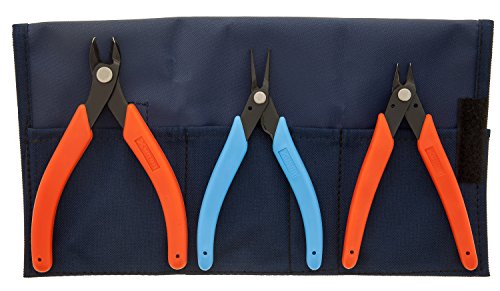
Xuron TK2200 Railroaders Tool Kit
$57.50The rail cutter, pliers and a tweezer in one kit, which is close to the complete list of what track laying actually needs.
Best for: buying the track tools in one go
Check price on Amazon
Xuron 410 Micro-Shear Flush Cutters
$16.04A smaller cutter for wire, decoder leads and plastic sprue, where the full size rail cutter is clumsy.
Best for: wire and fine detail work
Check price on Amazon
101 Track Plans for Model Railroaders
$17.99The most widely owned track plan book in the hobby. The plans are old and some of the geometry is tight by modern standards, and it remains the best value starting point there is.
Best for: a first look at what fits in a given space
Check price on Amazon
Build Your First Layout Model Railroader Essential
$21.99Takes one layout from bare benchwork to running, which is more useful to a beginner than a book of plans with no construction guidance.
Best for: a first layout, start to finish
Check price on Amazon
8 Realistic Track Plans For Small Switching Layouts
$21.05Switching layouts fit on a shelf and give more operation per square foot than any loop. The right book for anyone whose real constraint is space.
Best for: a shelf layout in a small room
Check price on AmazonHow we chose
We did not test these products in person and we never claim to. Picks are researched from manufacturer specification sheets and instruction manuals, published NMRA standards and recommended practices, and the recurring themes in verified owner reviews. Every pick is matched to a real scale, a real minimum radius or a real current draw rather than to a price bracket, and it is placed in the tier where its capability actually belongs. Where a product is wrong for most layouts we say so on the page, and where a figure is a hobby rule of thumb rather than a published standard we say that too.
Sources
- NMRA Standard S-1.2, General Standard Scales
Frequently asked questions
How long is 100 feet in HO scale?
13.78 inches, which is 349.9 millimetres. HO scale is 1:87.1, so the 1,200 prototype inches divide by 87.1 to give the model dimension. In N scale the same thing is 7.5 inches and in O scale it is 25 inches.
How long is 100 feet in N scale?
7.5 inches, or 190.5 millimetres. N scale is 1:160, which makes it a little over half the linear size of HO and therefore roughly a quarter of the area for the same railroad. That area difference is the main reason people choose N.
What is the difference between scale and gauge?
Scale is the proportion of the model to the real thing, such as 1:87.1 for HO. Gauge is the distance between the rails, which for HO is 16.5 millimetres. They are independent: narrow gauge modelling uses HO scale models on narrower track, and large scale uses several different proportions on the same 45 millimetre track.
How do I convert a model measurement back to prototype feet?
Multiply by the scale proportion, then divide by twelve. A 13.78 inch measurement in HO is 13.78 times 87.1, which is 1,200 inches, and dividing by twelve gives 100 prototype feet. A scale rule does this directly without any arithmetic.
Why is HO scale 1:87.1 rather than a round number?
HO means half O, and it was derived by halving O scale. Because O scale settled on different proportions in Britain and America, the halved figure came out at 1:87.1 rather than anything neat. The difference from a round 1:87 is under a tenth of a percent and has no practical effect on anything you build.
Is G scale a single proportion?
No, and this catches people out. Models from 1:32 to 1:20.3 are all sold as G and all run on the same 45 millimetre gauge track, because they represent prototypes of different track gauges. Two G scale models can be visibly different sizes and both be correct. Always check the stated proportion of the specific model.
Researched, not professional advice. This page is compiled from published manufacturer specifications, instruction manuals, published NMRA standards and recommended practices, and owner-review consensus, not hands-on testing. Figures described as a rule of thumb are hobby convention rather than a standard, and they are labelled that way wherever they appear. Always check a radius, a clearance or a grade against your own equipment before you cut wood or lay rail, because manufacturers vary and so does what your specific models will tolerate. Any permanent mains wiring in a layout room is work for a licensed electrician to your local code.