Space and planning
Model Railroad Scale Converter
Quick answer
Divide the prototype dimension by the scale proportion. A 50 foot boxcar is 600 prototype inches, so in HO at 1:87.1 it is 6.89 inches, in N at 1:160 it is 3.75 inches, and in O at 1:48 it is 12.5 inches. To go backwards, multiply the model measurement by the proportion.
Scale conversion is division, and the only thing that makes it feel harder than it is is the number of different units the hobby uses at once. Model specifications are published in inches and in millimetres, prototype dimensions come in feet, and scale proportions are ratios.
The rule: a scale is a proportion, so divide by it. HO is 1:87.1, which means the model is one eighty-seven-point-one-th of the real thing. A 50 foot car is 600 prototype inches, and 600 divided by 87.1 is 6.89 inches.
This matters more than arithmetic usually does, because almost every scenery mistake in this hobby is a scale error. A building one storey too tall, a road two lanes too wide, a figure that is visibly the wrong size standing next to a boxcar. Checking takes seconds.
Scale converter
In HO scale
| Scale | Proportion | Inches | Millimetres | Feet |
|---|
Tools for measuring and converting
Top matches update when you change your numbers.

HARDELL Digital Caliper 6 Inch with Large LCD
$22.99Measures in both inches and millimetres at the press of a button, which is exactly what scale modelling needs when standards are published in one and track in the other.
Best for: measuring and converting scale dimensions
Check price on Amazon
Atlas Track Planning Template HO Scale
$9.25A physical drawing template of Atlas track geometry. Drawing a plan with the real curve radii prevents the commonest planning error, which is a curve that does not exist.
Best for: drawing an HO plan to real geometry
Check price on Amazon
Atlas N Scale Track Planning Template
$8.81The same template in N scale geometry.
Best for: drawing an N scale plan to real geometry
Check price on Amazon
Excel Deluxe Model Railroad Tool Set
$67.57A knife handle, blades, files and a saw assembled specifically for model railroad work rather than a generic craft kit.
Best for: a complete modelling tool set from one brand
Check price on Amazon
101 Track Plans for Model Railroaders
$17.99The most widely owned track plan book in the hobby. The plans are old and some of the geometry is tight by modern standards, and it remains the best value starting point there is.
Best for: a first look at what fits in a given space
Check price on Amazon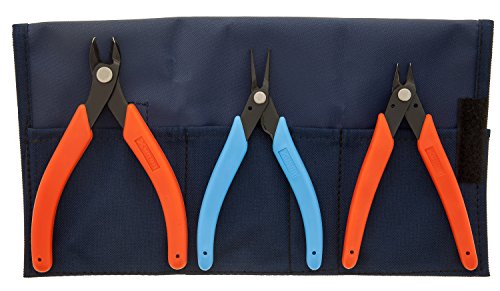
Xuron TK2200 Railroaders Tool Kit
$57.50The rail cutter, pliers and a tweezer in one kit, which is close to the complete list of what track laying actually needs.
Best for: buying the track tools in one go
Check price on AmazonCommon dimensions in the three main scales
The dimensions people convert most often. If you only ever remember one number, remember that an 85 foot passenger car is 11.71 inches in HO, because that is the figure that decides most layout plans.
A 50 foot boxcar is 3.75 inches in N scale, 6.89 inches in HO and 12.5 inches in O, which is the same car taking three and a third times as much shelf in O as in N.
| What it is | Prototype | N scale | HO scale | O scale |
|---|---|---|---|---|
| 40 foot boxcar | 40 ft | 3 in | 5.51 in | 10 in |
| 50 foot boxcar | 50 ft | 3.75 in | 6.89 in | 12.5 in |
| 85 foot passenger car | 85 ft | 6.38 in | 11.71 in | 21.25 in |
| 60 foot diesel locomotive | 60 ft | 4.5 in | 8.27 in | 15 in |
| Six foot person | 6 ft | 0.45 in | 0.83 in | 1.5 in |
| 10 foot building storey | 10 ft | 0.75 in | 1.38 in | 2.5 in |
| 12 foot road lane | 12 ft | 0.9 in | 1.65 in | 3 in |
| 53 foot semi trailer | 53 ft | 3.98 in | 7.3 in | 13.25 in |
Every scale, its proportion and its track gauge
Scale and gauge are two different things and confusing them causes real problems. Scale is the proportion of the model. Gauge is the distance between the rails.
HO scale is 1:87.1 running on 16.5 mm gauge track, and N scale is 1:160 on 9 mm gauge, which is why HO and N models cannot share track.
| Scale | Proportion | Track gauge (mm) | Track gauge (in) | Character |
|---|---|---|---|---|
| Z | 1:220 | 6.5 mm | 0.256 in | The smallest commercial scale, where a whole layout fits in a briefcase. |
| N | 1:160 | 9 mm | 0.354 in | Half the linear size of HO, so a quarter of the area, which buys mainline run in a spare room. |
| TT | 1:120 | 12 mm | 0.472 in | Between N and HO. A small but genuine following, and far less ready-to-run support than either neighbour. |
| HO | 1:87.1 | 16.5 mm | 0.65 in | The default. More models, more track and more parts than every other scale combined. |
| S | 1:64 | 22.42 mm | 0.883 in | American Flyer territory. Handsome and roomy, with a much thinner catalogue than HO or O. |
| O | 1:48 | 31.75 mm | 1.25 in | Big, heavy and durable. Three-rail O is its own world with its own sharper curve conventions. |
| G | 1:22.5 | 45 mm | 1.772 in | Garden scale. Weatherproof, expensive per foot, and the only scale most people run outdoors. |
Scale proportions follow NMRA Standard S-1.2. Large scale is not a single proportion: models from 1:32 to 1:20.3 all run on the same 45 mm track and all get sold as G, so check the proportion of the specific model rather than trusting the letter.
How to do it without a calculator
Two operations cover everything you will ever need.
Prototype to model: convert the prototype dimension to inches, then divide by the proportion. Fifty feet is 600 inches, and 600 divided by 87.1 is 6.89 inches in HO. For millimetres, multiply the result by 25.4.
Model to prototype: multiply by the proportion, then divide by twelve. A 6.89 inch HO model is 6.89 times 87.1, which is 600 inches, or 50 prototype feet.
A scale rule does this with no arithmetic at all, because it is marked directly in prototype feet for a given scale, and it is genuinely worth owning if you build structures. A digital caliper that switches between inches and millimetres is the other tool that earns its place, because the hobby has never settled on one unit and never will.
Why the same room is a different railroad in each scale
The proportions look like modest differences and they are not, because area goes as the square of the linear ratio. N scale is roughly half the linear size of HO, which means the same railroad takes about a quarter of the area. That is the entire argument for N scale, and it is a strong one.
Going the other way, O scale is roughly 1.8 times the linear size of HO, so the same railroad takes about three and a quarter times the area. What you get in exchange is a model you can see the detail on without leaning in, mechanisms heavy enough to be reliable, and equipment a child can handle without destroying it.
The honest framing is that scale is a trade between how much railroad fits and how much of each model you can appreciate. There is no correct answer, and the most common regret in either direction is choosing the scale before measuring the room.
Frequently asked questions
How do I convert a real dimension to HO scale?
Convert it to inches and divide by 87.1. A 40 foot prototype car is 480 inches, and 480 divided by 87.1 is 5.51 inches. For millimetres, multiply that result by 25.4, which gives 140 mm. The same method works for any scale, changing only the number you divide by.
What is the difference between scale and gauge?
Scale is the proportion of the model to the real thing, such as 1:87.1 for HO. Gauge is the distance between the rails, which for HO is 16.5 millimetres. They are independent: narrow gauge modelling uses full HO scale models on narrower track, and large scale uses several different proportions on the same 45 millimetre track.
How much smaller is N scale than HO?
N is 1:160 against HO at 1:87.1, so it is about 54 percent of the linear size. Because area goes as the square of that, the same railroad takes roughly a quarter of the space in N. That area difference, rather than the size of the models themselves, is the reason most people choose N scale.
Is O scale 1:48 everywhere?
In the United States, yes, O scale is 1:48, which is a quarter of an inch to the foot. In Britain O scale is 1:43.5 and in continental Europe 1:45, all running on the same 32 millimetre gauge track. American three rail O gauge is a separate tradition again, with its own conventions about selective compression and curve radius.
Why do some G scale models look bigger than others?
Because G is not one proportion. Models from 1:32 to 1:20.3 are all sold as G and all run on the same 45 millimetre track, because they represent prototypes of different real track gauges. Two G scale models can be visibly different sizes and both be entirely correct. Always check the stated proportion of the specific model.
Do I need a scale rule or will a tape measure do?
A tape measure plus this calculator covers everything. A scale rule is a convenience rather than a necessity: it is marked in prototype feet for a given scale, so you read the answer directly instead of dividing. If you build structures or scratchbuild anything it pays for itself quickly in avoided arithmetic errors.
Researched, not professional advice. This page is compiled from published manufacturer specifications, instruction manuals, published NMRA standards and recommended practices, and owner-review consensus, not hands-on testing. Figures described as a rule of thumb are hobby convention rather than a standard, and they are labelled that way wherever they appear. Always check a radius, a clearance or a grade against your own equipment before you cut wood or lay rail, because manufacturers vary and so does what your specific models will tolerate. Any permanent mains wiring in a layout room is work for a licensed electrician to your local code.