Space and planning
Track Length and Cost Calculator
Quick answer
Track length is the loop circumference plus the straights. An oval on a 4 by 8 foot sheet at 22 inch radius needs about 247 inches of track, which is 7 lengths of three foot flex track, before any sidings or turnouts.
Trackwork is usually the second largest line in a layout budget after motive power, and it is the one people estimate worst, because a plan that looks modest on paper turns into a surprising number of three foot lengths.
The arithmetic for an oval is straightforward. The two curved ends together make a full circle, so that portion is the circumference at your radius. The two straight sides are the layout length minus the two curve diameters, doubled. Add the two and you have the main line.
Then add everything else, which is where estimates go wrong. Turnouts are the expensive part per foot, sidings and spurs add up faster than expected, and a passing siding long enough to be useful is nearly as long as one straight side. Budget the turnouts first and the plain track second.
Track length and cost calculator
Trackwork cost
Track, turnouts and joiners
Top matches update when you change your numbers.

Atlas 500 36 inch Code 83 Super Flex Track 25 Pieces
$166.13 Specs and fitmentTwenty five lengths, which is 75 feet of track and enough for most home layouts in one purchase at the lowest price per foot.
Best for: laying a whole HO layout in code 83
Check price on Amazon
Atlas HO Code 83 Number 6 Left-Hand Super Switch
$27.40A number 6 in code 83, which is the general purpose turnout for main line and yard throat work and the one most track plans assume.
Best for: main line and passing siding work in HO
Check price on Amazon
Atlas Code 100/83 Nickel Silver Universal Rail Joiners 48 Pieces HO Scale
$8.00Rail joiners are a mechanical connection and not a reliable electrical one. Buy plenty, and plan to solder feeders to the rail rather than trusting these to carry current.
Best for: joining any code 83 or code 100 rail
Check price on Amazon
Woodland Scenics HO 2 foot Track-Bed Strips 12 Pack
$17.94Foam roadbed in pre-cut strips with the shoulder profile already there. Quieter than cork and it will not dry out and crumble the way cork can after some years.
Best for: HO roadbed that stays quiet
Check price on Amazon
Atlas HO Code 83 Super Flex Track 36 inch Section
$18.84One length of code 83 flex, the correct rail size for scale HO modelling. Buy one first and lay a curve with it before committing to a carton.
Best for: trying flex track before buying in bulk
Check price on Amazon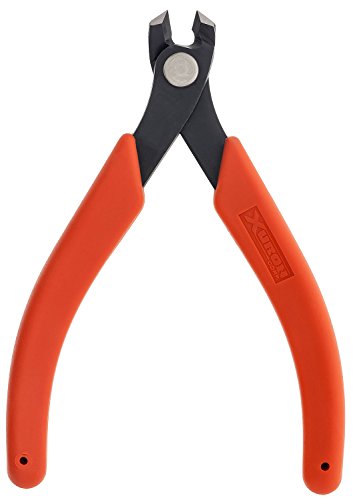
Xuron Vertical Track Cutter 2175M
$21.25Cuts rail cleanly with almost no distortion, which is what stops a kink at every joint. The vertical handle geometry lets you cut rail already laid on the layout.
Best for: cutting rail in place
Check price on AmazonMain line track for common layout sizes
An oval at the maximum radius each footprint allows, in three foot flex track lengths, priced from the current bulk carton rate. This is main line only, with no sidings.
A 4 by 8 foot oval needs about 7 lengths of three foot flex track for the main line alone, roughly $47 at current bulk pricing.
| Layout size | Max radius | Track length | Flex lengths | Cost |
|---|---|---|---|---|
| 4 by 8 ft | 22 in | 242 in | 7 | $47 |
| 5 by 9 ft | 28 in | 280 in | 8 | $53 |
| 30 by 80 in door | 13 in | 190 in | 6 | $40 |
| 6 by 10 ft | 34 in | 318 in | 9 | $60 |
Priced from the 25 piece carton, which works out at about $7 per three foot length against $19 buying singly. Buying singly costs roughly a third more.
Why turnouts dominate the budget
A three foot length of flex track costs about $7 in a carton. A single number 6 turnout costs about $27, which is roughly 4 times as much for a fraction of the length.
That ratio is why a track plan's turnout count matters more to the budget than its overall size. A simple oval with one passing siding needs two turnouts. The same oval with a small yard needs six or eight, and the trackwork cost roughly triples while the layout stays exactly the same size.
It is also why the standard advice to avoid filling a small layout with track is a financial argument as well as an aesthetic one. Each extra spur is a turnout plus the track behind it, and on a 4 by 8 a spur that holds two cars costs more than the entire main line straight it branches from.
What else the track budget has to carry
Four items people leave out of the first estimate, all of which are real:
- Roadbed. Under every inch of track. Sold in strips or rolls and a layout swallows more than expected once sidings are included.
- Rail joiners. Cheap individually and needed in quantity, and worth over-buying because they are easy to lose and easy to damage.
- Feeder wire and bus wire. A layout wired properly has a feeder roughly every three feet, which is a lot of short wires and a fair amount of bus.
- Switch machines or ground throws. If the turnouts are not the type with a machine built in, every one needs something to throw it, and that cost is per turnout.
A reasonable planning rule is to work out the flex track and turnout cost, then add roughly 30 percent for everything above. It is not precise and it is much closer than ignoring them.
Frequently asked questions
How much track does a 4 by 8 layout need?
About 247 inches for a simple oval at 22 inch radius, which is roughly 7 lengths of three foot flex track. A passing siding adds another 2 to 3 lengths, and each industry spur adds one or two more plus a turnout. A realistic figure for a 4 by 8 with some operating interest is 10 to 12 lengths.
How much does model railroad track cost?
Flex track is around $7 per three foot length in a bulk carton, or about $19 bought singly. Turnouts are the expensive part, at roughly $27 each for a number 6. A simple 4 by 8 main line is modest; the same layout with a small yard costs several times more because of the turnouts.
Is it cheaper to buy flex track in bulk?
Yes, by roughly a third per length. The 25 piece carton works out at about $7 against $19 singly. The catch is that it commits you to one rail code for the whole layout, so decide between code 83 and code 100 before buying rather than after, because mixing them needs transition joiners.
How many turnouts does a small layout need?
Two for an oval with a single passing siding, which is the minimum for interesting operation. Four to six for an oval with a siding and two or three industry spurs, which is a good target for a 4 by 8. Beyond about eight on a small layout you are usually filling space with track rather than adding operation.
What am I likely to forget in the track budget?
Roadbed under every inch of track, rail joiners in quantity, feeder and bus wire for the electrical connections, and something to throw each turnout if they do not have built-in machines. Adding roughly 30 percent to the flex and turnout total covers these reasonably well for planning purposes.
Should I use sectional track or flex track?
Flex track for anything you are designing yourself, because it lays any radius including the intermediate ones and costs less per foot. Sectional track with moulded roadbed is better for a temporary or portable layout that gets taken up and put down, since it clips together and survives handling.
Researched, not professional advice. This page is compiled from published manufacturer specifications, instruction manuals, published NMRA standards and recommended practices, and owner-review consensus, not hands-on testing. Figures described as a rule of thumb are hobby convention rather than a standard, and they are labelled that way wherever they appear. Always check a radius, a clearance or a grade against your own equipment before you cut wood or lay rail, because manufacturers vary and so does what your specific models will tolerate. Any permanent mains wiring in a layout room is work for a licensed electrician to your local code.