Track
Code 75 vs Code 83 Track
Quick answer
Code 75 rail is 8 thousandths of an inch shorter than Code 83, a step most modelers notice far less than the jump from Code 100 to Code 83, and it demands equipment with accurate, low-profile wheel flanges. Atlas HO Code 83 Super Flex Track 36 inch Section represents Code 83; Peco SL-113 HO Transition Track Code 75 to Code 100 carries Peco's Code 75 rail into a Code 100 transition.

Atlas HO Code 83 Super Flex Track 36 inch Section
$18.84Rail height of 0.083 inches, the widely available default with the deepest catalog of matching turnouts.
Best for: trying flex track before buying in bulk
Check price on Amazon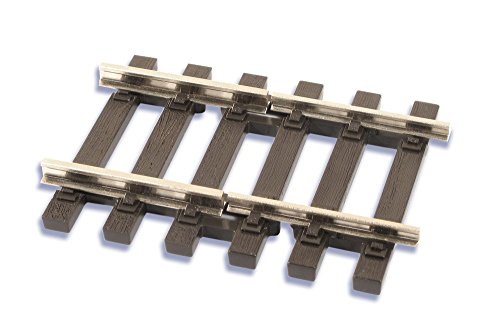
Peco SL-113 HO Transition Track Code 75 to Code 100
$17.29Peco's Code 75 rail, joined here through Peco's own transition track into Code 100, since Peco is the primary Code 75 source in HO.
Best for: connecting code 100 and code 75 track
Check price on AmazonThe verdict: the step from Code 83 to Code 75 is real but much smaller in practice than the step from Code 100 to Code 83, and it matters most to modelers already committed to fine-scale wheel standards rather than to someone building a first layout. Code 75 rail measures 0.075 inches tall against Code 83's 0.083 inches, a difference of just 8 thousandths of an inch, most visible up close on a well-lit mainline rather than across a room.
Peco is the manufacturer most associated with HO Code 75 track in North America, where Atlas and most other US brands concentrate their line on Code 83 and Code 100 instead. That makes Code 75 the choice with the narrower selection of matching turnouts and flex sections to shop from, a real practical tradeoff against its slightly finer appearance.
On this page
How much shorter is Code 75 than Code 83?
Code 75 rail stands 0.075 inches tall, against Code 83's 0.083 inches, a difference of 8 thousandths of an inch. Compare that to the 17 thousandth inch gap between Code 100 and Code 83, covered at Code 83 vs Code 100 track, and the Code 75 step is roughly half the size of that more commonly discussed jump. It is a real, visible difference in close, well-lit photography, and a much smaller one at normal viewing distance across a layout.
Does Code 75 need different wheels than Code 83?
It needs the same category of concern, just with less margin. Code 75's shorter rail leaves even less clearance under an oversized or deep-flange wheel than Code 83 already does, so equipment that runs fine on Code 83 is not automatically guaranteed to clear Code 75 without checking. Modelers who commit to Code 75 are generally also committed to a fine-scale or NEM wheel standard already, rather than arriving at Code 75 first and discovering the wheel requirement second.
Why is Code 75 track and turnout selection more limited?
Because the North American HO market concentrates around Code 83 and Code 100, most US manufacturers, Atlas included, build their flex track and turnout lines primarily at those two codes. Peco is the manufacturer most strongly associated with Code 75 in HO, and Peco SL-113 HO Transition Track Code 75 to Code 100 exists specifically because Code 75 layouts often need to interface with the more common Code 100 or Code 83 track elsewhere on the same railroad or at a connection to another modeler's layout.
Is the switch to Code 75 worth it over Code 83?
For most modelers building a first or second layout, no, the jump from Code 100 to Code 83 already delivers most of the visible realism gain for a fraction of the shopping complexity. Code 75 earns its place for modelers deep enough into fine-scale standards that they are already selecting equipment by wheel profile and are comfortable sourcing a narrower range of Peco-branded track and turnouts to match.
Code 75 vs Code 83, side by side
Code 75 sits 8 thousandths of an inch below Code 83, a smaller and less commonly needed step than moving from Code 100 down to Code 83.
| Spec | Code 75 | Code 83 |
|---|---|---|
| Rail height | 0.075 in | 0.083 in |
| Difference from Code 83 | −8 thousandths of an inch | baseline |
| Primary HO manufacturer | Peco | Atlas and most US brands |
| Matching turnout and flex selection | Narrower | Wide, current default |
Which one should you actually build with?
Build with Atlas HO Code 83 Super Flex Track 36 inch Section for a first or second HO layout, since it is realistic, widely stocked, and has the deepest catalog of matching turnouts to shop from. Reach for Code 75 track through the Peco line only once you are already selecting equipment by wheel profile and are willing to plan around a narrower parts selection, bridging to more common rail codes elsewhere on the layout with a transition piece like Peco SL-113 HO Transition Track Code 75 to Code 100 where needed.
Frequently asked questions
What is the actual height difference between Code 75 and Code 83 rail?
Code 75 rail stands 0.075 inches tall and Code 83 stands 0.083 inches tall, a difference of 8 thousandths of an inch. That is roughly half the 17 thousandth inch gap between Code 100 and Code 83, making the Code 75 step noticeably smaller in practice.
Do I need special wheels for Code 75 track?
You need equipment with accurate, low-profile wheel flanges, the same general requirement as Code 83 but with even less clearance margin. Deep, older-style flanges that already struggle on Code 83 are more likely to strike detail on the shorter Code 75 rail.
Why do fewer US brands make Code 75 track?
The North American HO market concentrates most of its flex track and turnout production around Code 83 and Code 100, since those match the wheel standards most widely produced equipment already uses. Peco is the manufacturer most associated with Code 75 in HO as a result.
Is Code 75 more realistic than Code 83?
Marginally, yes, since it stands closer to true HO scale rail height. The visual gain over Code 83 is smaller than the gain Code 83 already delivers over Code 100, so many modelers find Code 83 realistic enough without taking on Code 75’s narrower parts selection.
Can Code 75 and Code 100 track connect directly?
Not with a standard rail joiner, since the height difference is too large to seat properly. A purpose-built transition track, such as Peco’s Code 75 to Code 100 transition section, bridges the two rail heights cleanly where a Code 75 layout needs to interface with more common Code 100 track.
Should a beginner start with Code 75 track?
Generally no. Code 75’s narrower selection of matching turnouts and flex track, combined with its tighter wheel flange tolerance, adds shopping complexity a first layout does not need. Code 83 delivers most of the same realism gain over Code 100 with far easier parts availability.
Researched, not professional advice. This page is compiled from published manufacturer specifications, instruction manuals, published NMRA standards and recommended practices, and owner-review consensus, not hands-on testing. Figures described as a rule of thumb are hobby convention rather than a standard, and they are labelled that way wherever they appear. Always check a radius, a clearance or a grade against your own equipment before you cut wood or lay rail, because manufacturers vary and so does what your specific models will tolerate. Any permanent mains wiring in a layout room is work for a licensed electrician to your local code.