Track
Best HO Scale Flex Track
Quick answer
The best HO scale flex track for most layouts built with current equipment is Atlas HO Code 83 Super Flex Track 36 inch Section at $18.84, because code 83 rail is the scale-correct height that equipment made since the 1990s is designed to run on. Older stock with deep wheel flanges still needs the extra clearance of code 100.
Rail code is rail height measured in thousandths of an inch, and it is the single most consequential spec on a piece of HO track. Code 100 is taller, tougher looking and more forgiving of the deep wheel flanges cast onto train set equipment from the 1970s through the 1990s. Code 83 is shorter, closer to the scale height of real rail, and it is what nearly every HO locomotive and car sold new today is built to clear. Atlas HO Code 83 Super Flex Track 36 inch Section is the right default for a new layout.
Flex track itself, as opposed to sectional track, is simply 36 inch lengths of rail on ties that you bend to the radius your plan calls for rather than snapping together fixed curves. It costs less per foot than sectional track and it lets a curve be exactly as broad as your locomotives need, not whatever radius a manufacturer chose to mold.
On this page
- Should I use code 83 or code 100 in HO?
- How much flex track do I need, and should I buy single pieces or a carton?
- Do rail joiners actually carry power reliably?
- Beginner: code 100 while you learn to lay flex track
- Intermediate: code 83 by the carton
- Expert: mixing rail codes across an expanding layout
Should I use code 83 or code 100 in HO?
Use code 83 unless you have a specific reason not to. Code 100, at 0.100 inches tall, was the HO standard for decades and it is still the rail most starter sets from that era were built around, along with a lot of older Athearn blue box and Life-Like equipment that has deeper wheel flanges than current NMRA-compliant wheelsets. That extra rail height gives those flanges more clearance and fewer derailments.
Code 83, at 0.083 inches, looks closer to the 2.5 to 3 inch tall rail a real railroad actually runs, and it is the size current production equipment from Athearn, Walthers, Bachmann and Kato is designed around. If your roster is built after roughly the 1990s, or you are buying new equipment as you go, code 83 is the better long term choice and it is what most published track plans now assume.
A transition track section exists specifically for the layout that has both: an older code 100 yard being extended in code 83, for example. It is a cleaner solution than filing a joint by hand.
How much flex track do I need, and should I buy single pieces or a carton?
Buy one piece first if you have never laid flex track before. A 4 by 8 foot layout with broad curves typically needs somewhere from 12 to 20 three foot lengths depending on the plan, which makes a 25 piece carton the better per-foot price once you know the plan is final.
A 25 piece carton of code 83 flex track covers about 75 feet of railroad at the lowest price per foot of any option here.
| Product | Rail code | Pieces | Total length | Best for |
|---|---|---|---|---|
| Atlas HO Code 83 Super Flex Track 36 inch Section | Code 83 | 1 | 3 ft | testing a curve before buying more |
| Atlas 500 36 inch Code 83 Super Flex Track 25 Pieces | Code 83 | 25 | 75 ft | a full layout, lowest cost per foot |
| Atlas Code 100 Nickel Silver Super-Flex Track 3 foot Section HO Scale | Code 100 | 1 | 3 ft | trying code 100 before committing |
| Atlas Code 100 Nickel Silver Super-Flex Track 5 Pack HO Scale | Code 100 | 5 | 15 ft | a small code 100 yard or extension |
Do rail joiners actually carry power reliably?
No, not on their own, and this is the mistake that shows up two or three years into a layout rather than on day one. A rail joiner is a mechanical friction fit between two lengths of rail. It is not a soldered electrical connection, and friction fits corrode, loosen with seasonal humidity changes in the layout room, and work slightly apart under normal expansion and contraction. A layout that depends on rail joiners alone to carry power from one section to the next develops dead sections as it ages, usually starting at the joint farthest from the power feed.
The fix is to solder a feeder wire to the rail every three to six feet and run those feeders to a bus wire underneath the benchwork, rather than trusting the joiners to relay current down the line. Atlas Code 100/83 Nickel Silver Universal Rail Joiners 48 Pieces HO Scale are still necessary hardware, since every piece of flex track needs joiners at both ends, but treat them as a mechanical splice and nothing more. Peco SL-110 HO Code 75 Rail Joiners 24 Pack are worth keeping separate from a standard Atlas assortment if you are working in Peco's finer code 75 or code 83 rail, since mixing joiner sizes across brands is a common cause of a kink at the join.
Beginner: code 100 while you learn to lay flex track
If your roster includes older equipment with deep flanges, or this is the first time you have curved a length of flex track by hand, code 100 is the more forgiving choice. It tolerates a slightly imperfect curve and older wheelsets better than code 83 does.

Atlas Code 100 Nickel Silver Super-Flex Track 3 foot Section HO Scale
$16.70A single length of code 100 to practice bending, spiking and gluing before you have committed to a carton or a rail code.
Best for: a first flex track curve, or a roster with older deep-flange wheels
Check price on AmazonIntermediate: code 83 by the carton
Once the track plan is settled and you are buying equipment made in the last two decades, code 83 by the carton is the buy-once decision. It is the rail size current production HO equipment is designed for, and the per-foot price on a 25 piece box beats buying single lengths as you go.

Atlas 500 36 inch Code 83 Super Flex Track 25 Pieces
$166.13 Specs and fitment75 feet of scale-correct code 83 rail at the lowest price per foot Atlas sells it at, enough for most home layouts in one purchase.
Best for: a finished track plan built around current-production HO equipment
Check price on AmazonExpert: mixing rail codes across an expanding layout
An experienced modeler extending an older code 100 layout in code 83, or running a code 83 main into a code 100 industrial spur left from an earlier build, needs a clean way to join the two rail heights rather than filing one down by hand.
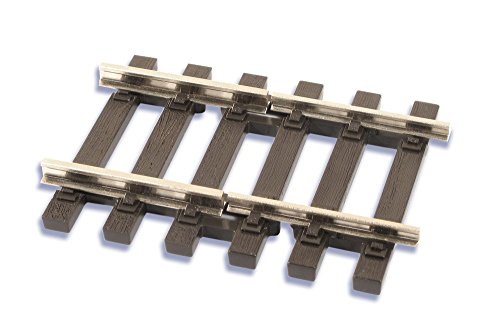
Peco SL-113 HO Transition Track Code 75 to Code 100
$17.29Joins code 75 and code 100 rail heights cleanly in one factory-made section, which avoids the derailment that a hand-filed joint at a code change usually causes.
Best for: a layout that genuinely mixes rail codes, such as an older yard feeding a newer main
Check price on AmazonWho should not buy this tier: a first-time flex track layer building a single simple loop. Pick one rail code, buy it consistently, and skip the transition-track complexity entirely.
How we chose
We did not test these products in person and we never claim to. Picks are researched from manufacturer specification sheets and instruction manuals, published NMRA standards and recommended practices, and the recurring themes in verified owner reviews. Every pick is matched to a real scale, a real minimum radius or a real current draw rather than to a price bracket, and it is placed in the tier where its capability actually belongs. Where a product is wrong for most layouts we say so on the page, and where a figure is a hobby rule of thumb rather than a published standard we say that too.
Sources
- Atlas Model Railroad Co. published track specifications
Frequently asked questions
What does rail code mean on model railroad track?
Rail code is the height of the rail measured in thousandths of an inch, so code 83 rail stands 0.083 inches tall and code 100 stands 0.100 inches tall. It has nothing to do with scale or gauge. HO track is sold in both codes, and the two are not meant to be treated as interchangeable without a transition piece.
Can I mix code 83 and code 100 track on the same HO layout?
Yes, but not by simply pushing the rail ends together. A dedicated transition track section, or a hand-filed and shimmed joint, keeps the railhead level across the change in height. Mixing codes without one is a reliable way to build a derailment into a specific spot on the layout.
How much HO flex track do I need for a 4 by 8 foot layout?
Most 4 by 8 plans use somewhere between 12 and 20 three-foot lengths of flex track depending on how many curves, sidings and reverse loops the plan includes. Sketch the plan first and count linear feet of track before buying, since a 25 piece carton is cheaper per foot but wasteful if the plan only needs eight lengths.
Do I still need rail joiners if I am soldering feeder wires?
Yes. Rail joiners hold the physical alignment of one rail end to the next so wheels do not catch a gap or a step, and soldered feeders carry the electricity. The two jobs are separate, and skipping joiners in favor of feeders alone leaves the track mechanically loose at every joint.
Will code 100 track run modern HO locomotives?
Almost always, yes. Code 100 is taller, so it accepts both old deep flanges and current shallow ones. The tradeoff is appearance, since code 100 rail looks noticeably chunkier next to scale-detailed current equipment, which is why most new layouts choose code 83 instead unless older stock demands otherwise.
Why does flex track cost less per foot than sectional track?
Flex track is a simpler product: straight rail on ties with no molded roadbed, no fixed curve stamped into it and no snap-fit ends. Sectional and roadbed track systems like Bachmann E-Z Track or Kato Unitrack add manufacturing cost for that convenience, which is worth paying for a first layout but adds up on a large one.
Researched, not professional advice. This page is compiled from published manufacturer specifications, instruction manuals, published NMRA standards and recommended practices, and owner-review consensus, not hands-on testing. Figures described as a rule of thumb are hobby convention rather than a standard, and they are labelled that way wherever they appear. Always check a radius, a clearance or a grade against your own equipment before you cut wood or lay rail, because manufacturers vary and so does what your specific models will tolerate. Any permanent mains wiring in a layout room is work for a licensed electrician to your local code.